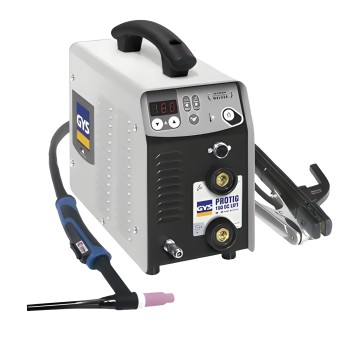
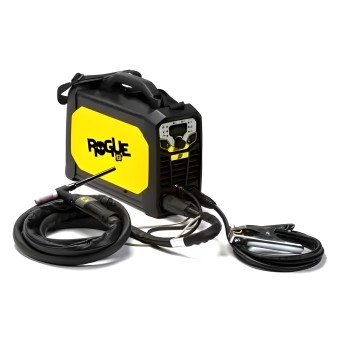
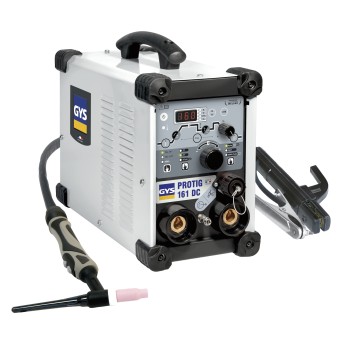
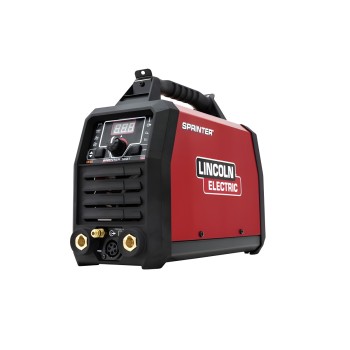
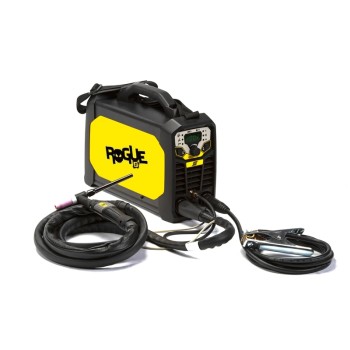
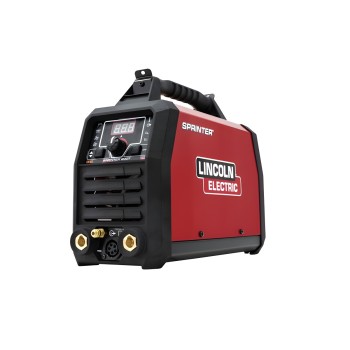
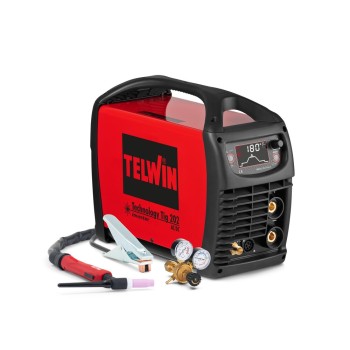
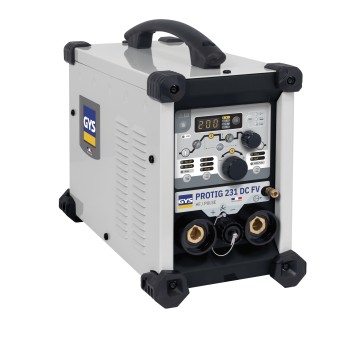
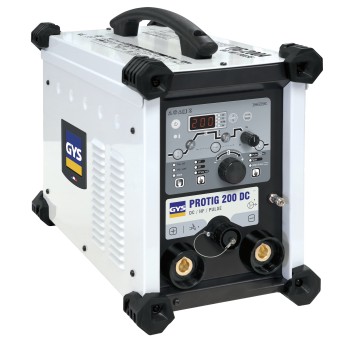
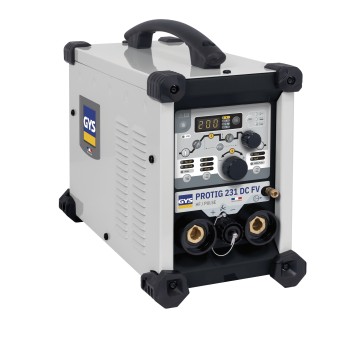
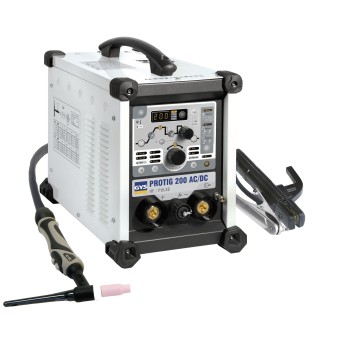
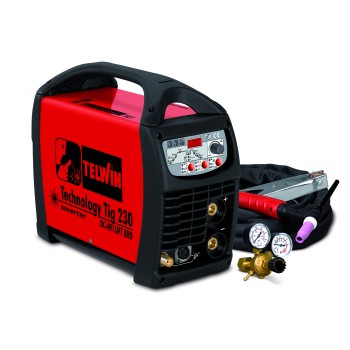
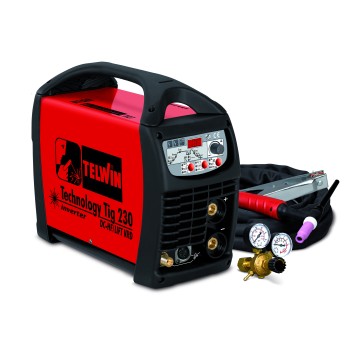
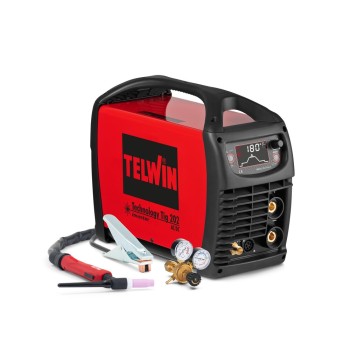
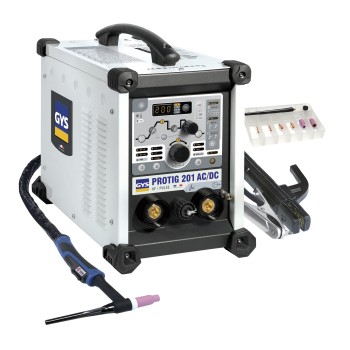
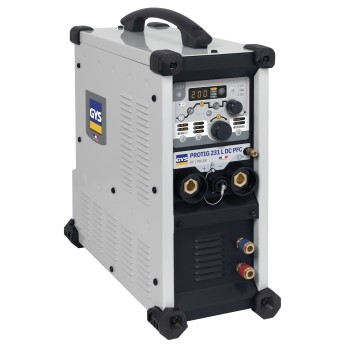
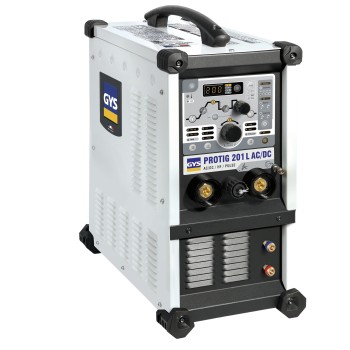
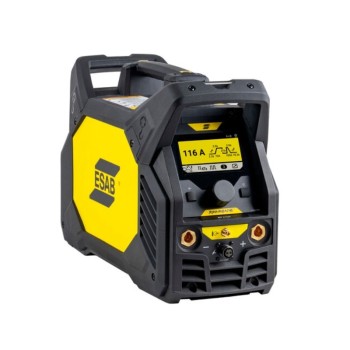
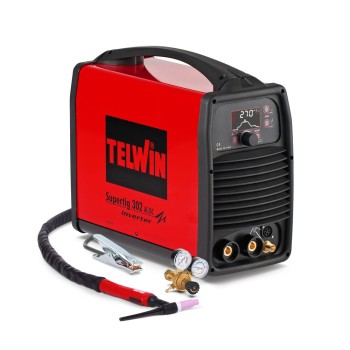
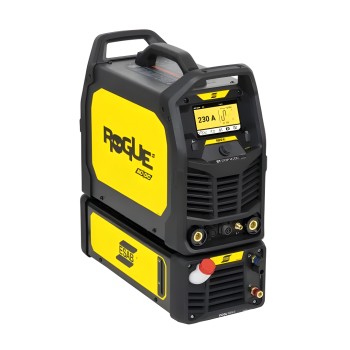
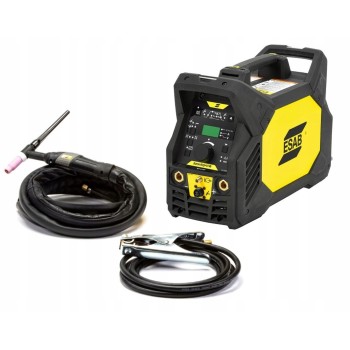
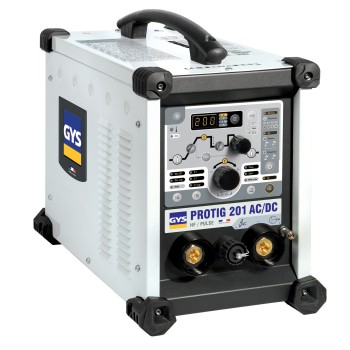
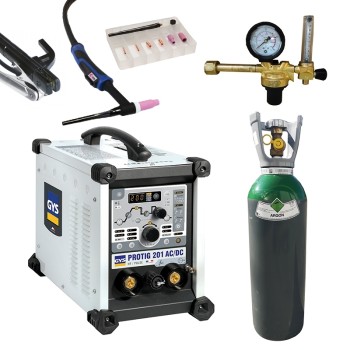
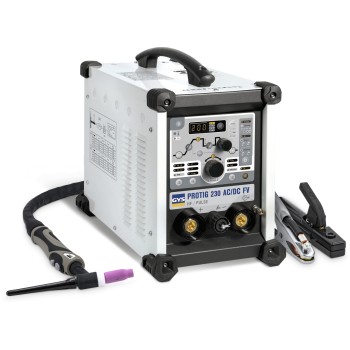
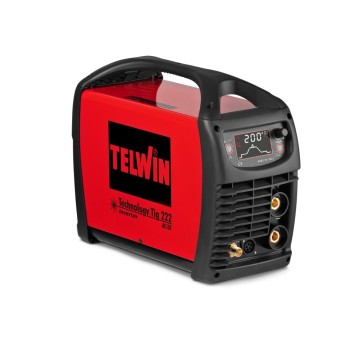
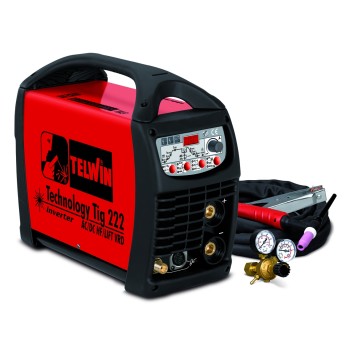
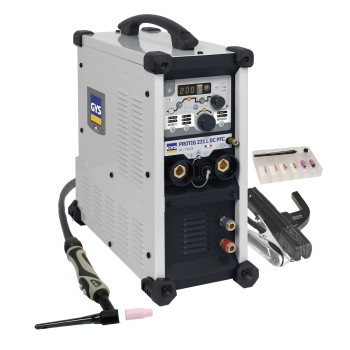
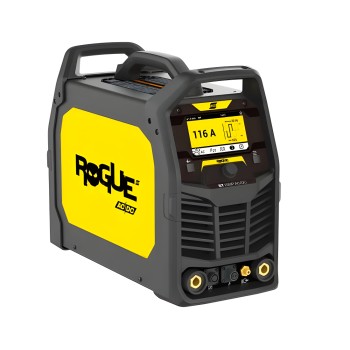
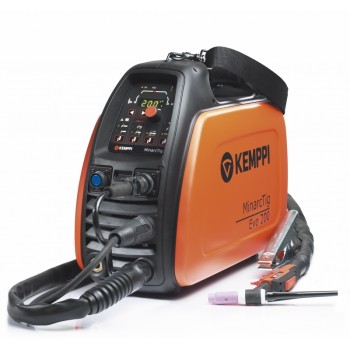
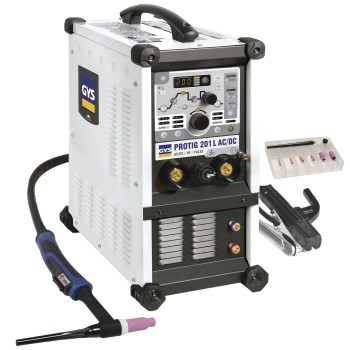
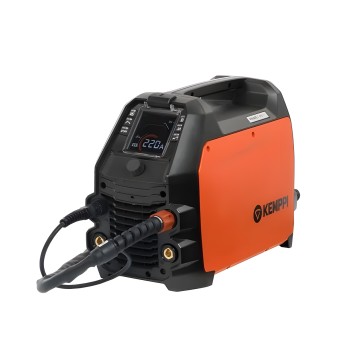
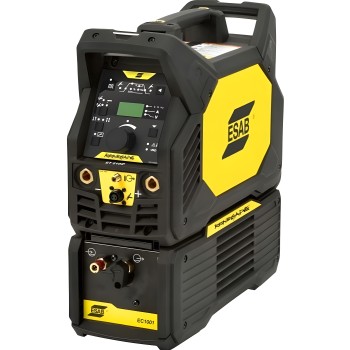
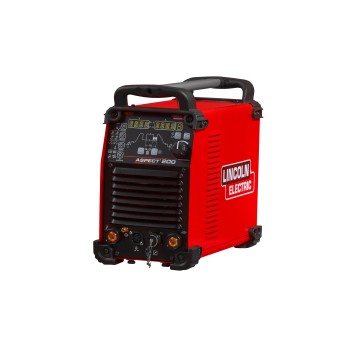
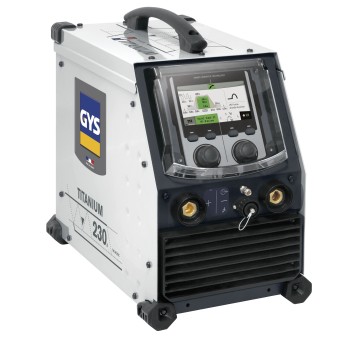
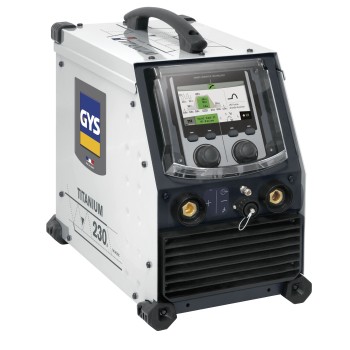
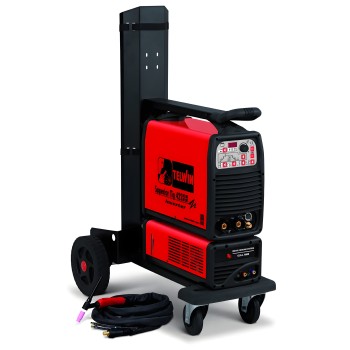
The TIG welder is the absolute benchmark for precision and finish. A clean process with no spatter, TIG welding produces beads of unmatched aesthetic quality, particularly on stainless steel and aluminium. Discover our selection of TIG welders, from DC models for steel and stainless steel to AC/DC models capable of welding aluminium.
How does TIG welding work?
TIG welding (Tungsten Inert Gas) relies on a non-consumable tungsten electrode that creates the arc, while filler metal is added manually and separately into the weld pool. The whole process is protected by an inert gas, typically pure argon. This separation between the electrode and the filler gives the TIG welder total control over the energy deposited and the shape of the bead. This is what accounts for the cleanliness and precision that are characteristic of the process.
DC TIG or AC/DC TIG?
The choice of current is decisive. A DC TIG welder using direct current welds steel, stainless steel, and most ferrous metals with remarkable quality. An AC/DC TIG welder adds alternating current, which is essential for welding aluminium and its alloys: the alternating current "removes" the oxide layer from the aluminium during welding. If you work with aluminium, the AC/DC TIG welder is indispensable; for steel and stainless steel alone, DC is sufficient.
Why choose TIG?
TIG welding is the go-to choice whenever finish quality matters. Consistent bead, no spatter, no slag, fine and neat welds: it is the process of choice for decorative sheet metal work, food industry applications, decorative work, and aerospace. The TIG welder excels on thin materials and delicate metals. For work requiring greater productivity on thick parts, compare with our MIG-MAG welders; for portable work, see our MMA welders.
Essential consumables
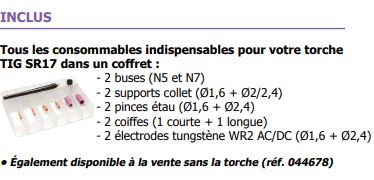
A TIG welder works with a few key consumables. The tungsten electrode, identified by a colour code, must be suited to the metal and the current. The TIG filler metal is chosen according to the grade of the base metal (steel, stainless steel, aluminium). The gas shielding requires an argon cylinder. Finally, a quality TIG torch, fitted with the right ceramic nozzle and collet, ensures a stable arc.
Choosing the right TIG welder
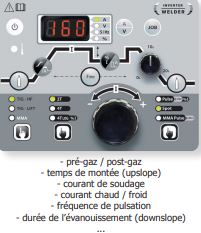
Check the maximum amperage, which determines the weldable thickness, and the duty cycle for endurance. Advanced features make the difference on a professional TIG welding machine: HF ignition (no contact), pulsed current for thin sheet metal, progressive foot pedal or trigger to control energy input. For aluminium, check the quality of the alternating current settings (balance and frequency).
Safety and finish
Like all arc processes, TIG requires rigorous protection: an auto-darkening welding helmet sensitive to low amperage, supple gloves to maintain dexterity. After welding stainless steel, a stainless steel treatment by pickling and passivation restores the appearance and corrosion resistance of the bead.
TIG: preparation and cleanliness
The quality of a TIG weld is determined even before striking the arc, in the preparation. Since the process produces no slag, it does not "forgive" a dirty surface: degrease and carefully clean the parts, and use a dedicated stainless steel brush for stainless steel and aluminium. The slightest trace of grease or oxide will result in porosity.
Productivity and finish
The TIG welder prioritises quality over speed. Slower than MIG, it nonetheless avoids almost all rework thanks to the cleanliness of the bead, which compensates on visible parts. For long, repetitive welds on thick steel, MIG remains more cost-effective; for thin sheet metal, stainless steel, and decorative aluminium, TIG welding is the clear choice. Many workshops keep both processes and switch between them depending on the type of part and the required finish.
Our recommendation
For welding steel and stainless steel with an impeccable finish, a DC TIG welder is sufficient. To add aluminium to your work, opt for an AC/DC model. Choose a machine with HF ignition and pulsed current if you are looking for versatility and precision. Compare our TIG generators, check the included features, and choose the machine that will serve you through your most demanding work.
Frequently asked questions
What is the difference between a DC TIG welder and an AC/DC TIG welder?
The DC TIG welder (direct current) welds steel, stainless steel, and ferrous metals with outstanding quality. The AC/DC TIG welder adds alternating current, which is essential for aluminium: alternating current removes the oxide layer that forms on the surface. For welding aluminium, AC/DC is indispensable.
Can you weld aluminium with a TIG welder?
Yes, but only with an AC/DC TIG welder using alternating current. This current removes the refractory oxide layer from aluminium during welding, which a DC machine cannot do. Pure argon and a tungsten electrode suited to alternating current are also required.
What gas should be used for TIG welding?
Pure argon, which is an inert gas. It protects the tungsten electrode and the weld pool from oxidation, ensuring a stable arc and a clean bead. It is the reference gas for TIG welding, regardless of the metal (steel, stainless steel, or aluminium).
Is TIG welding difficult to learn?
TIG requires more coordination than MIG or MMA, as you manage the torch with one hand and the filler metal with the other. It has a steeper learning curve, but delivers the cleanest finish. With practice on scrap material, progress is rapid.
What is the price of a TIG welder?
The price of a TIG welder depends mainly on power output, duty cycle, brand, and included features. Also compare the accessories provided, as they significantly affect the real cost of use.
What is the best professional TIG welder?
The best professional TIG welder is one that combines a high duty cycle, precise settings, good arc stability, and reliable after-sales service. For aluminium, choose an AC/DC model; for steel and stainless steel, a DC TIG welder is sufficient.


 Italy
Italy
 Germany
 Netherlands
 Croatia
 Denmark
 Finland
 Greece
 Ireland
 Sweden
 Norway
 Bulgaria
 Estonia
 Latvia
 Lithuania
 Poland
 Czech Republic
 Romania
 Slovakia
 Slovenia
 Hungary
 Spain
Spain



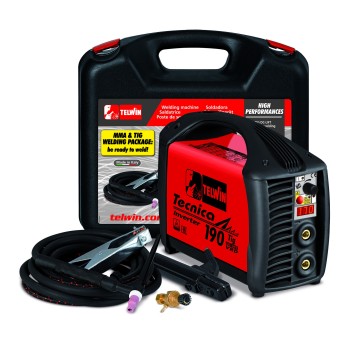
 2-year warranty