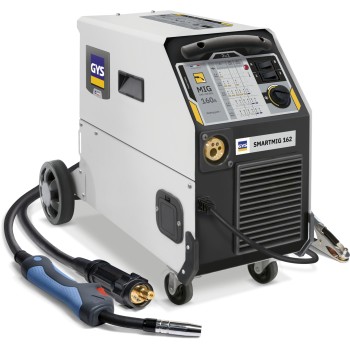
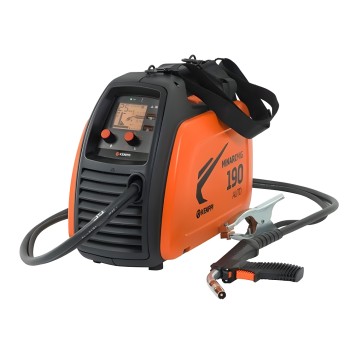
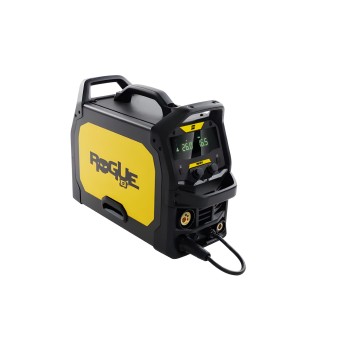
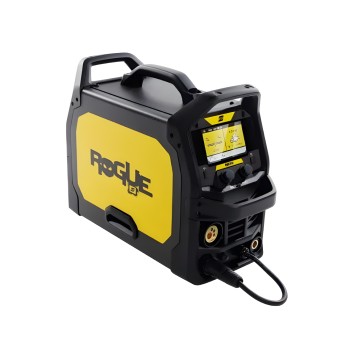
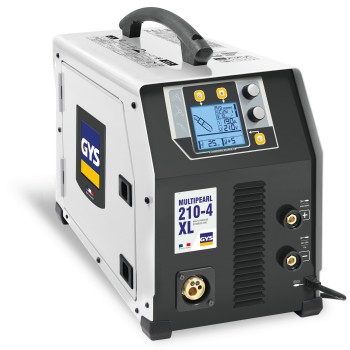
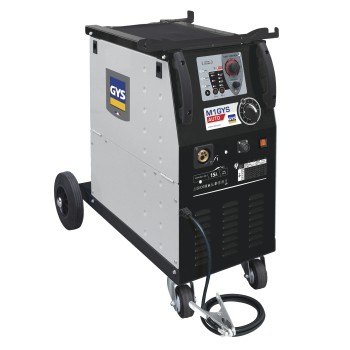
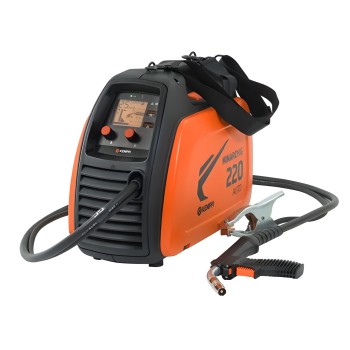
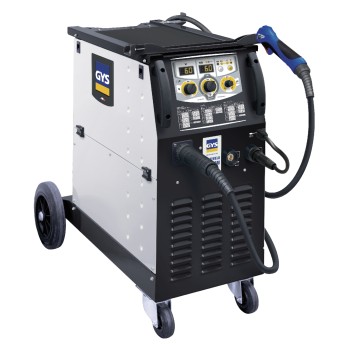
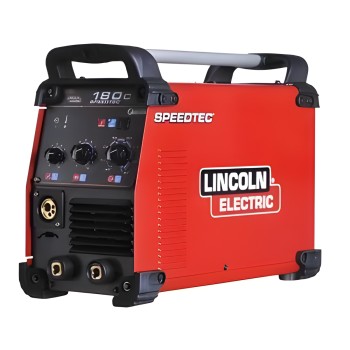
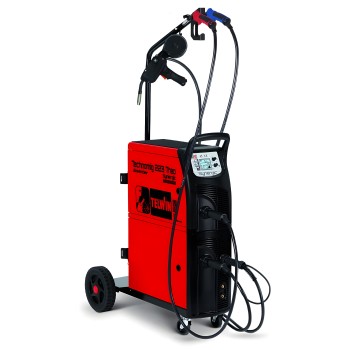
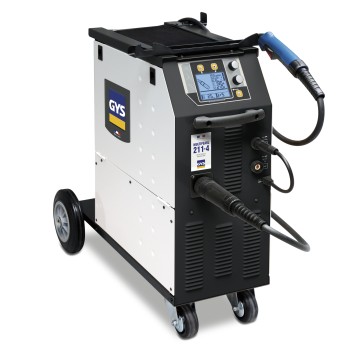
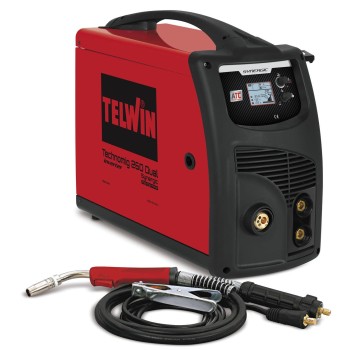
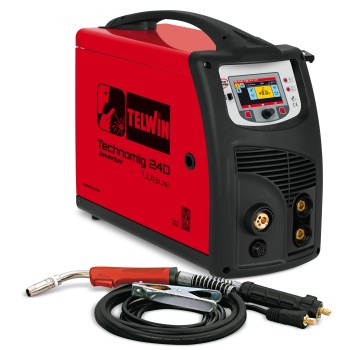
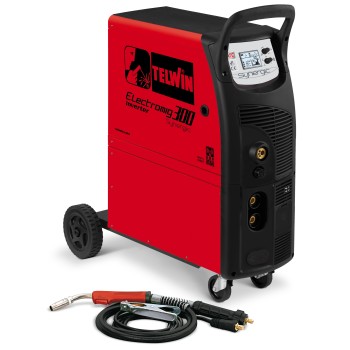
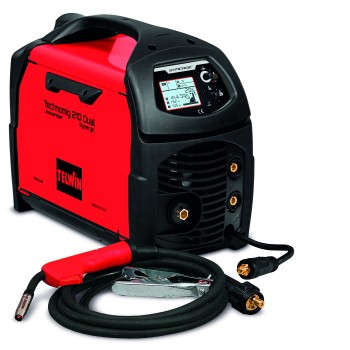
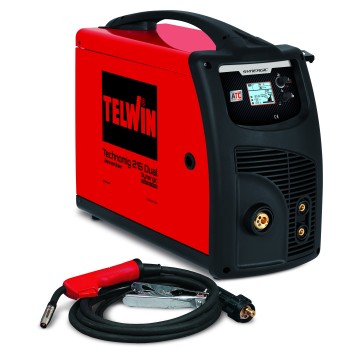
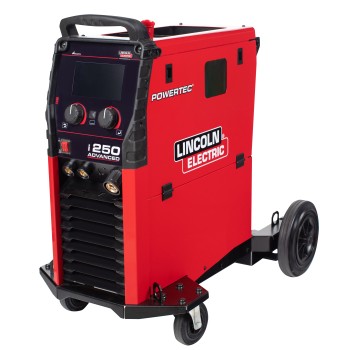
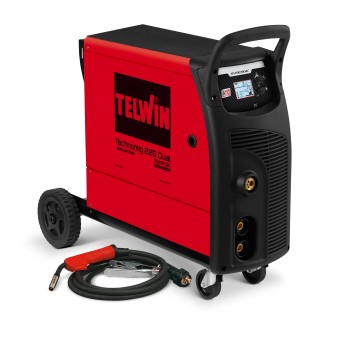
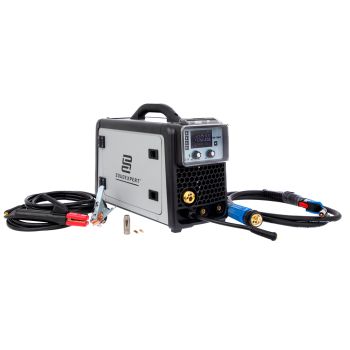
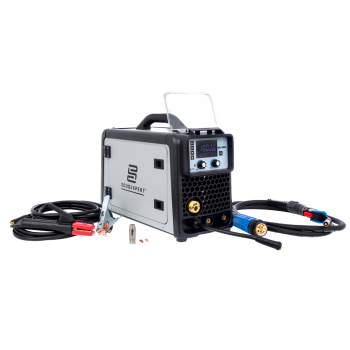
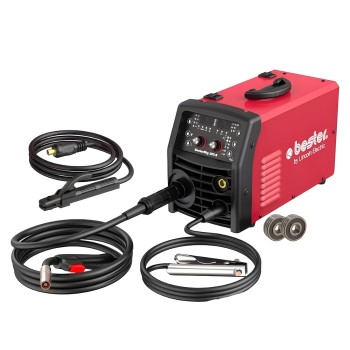
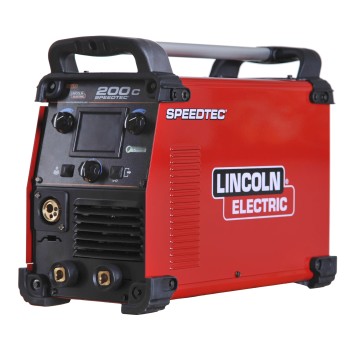
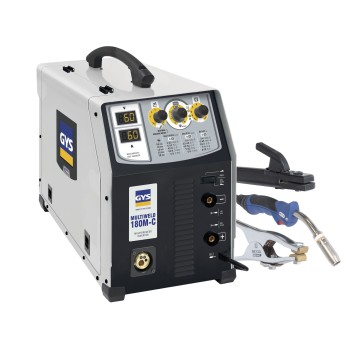
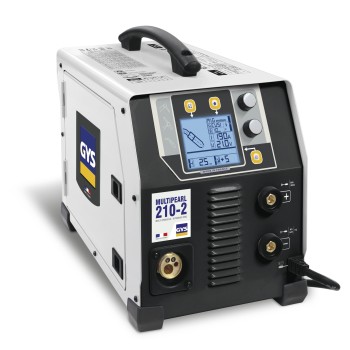
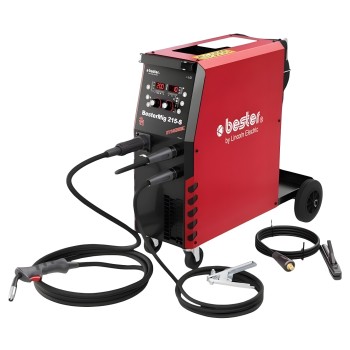
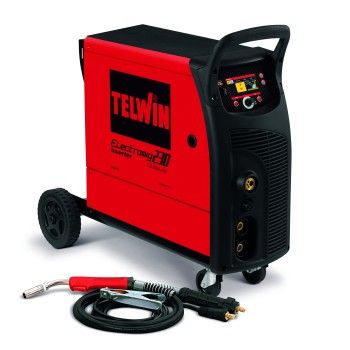
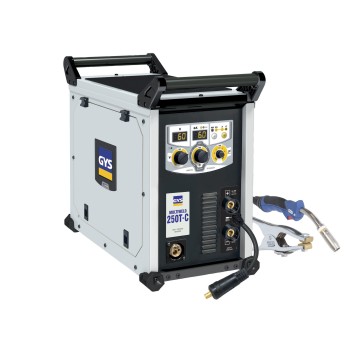
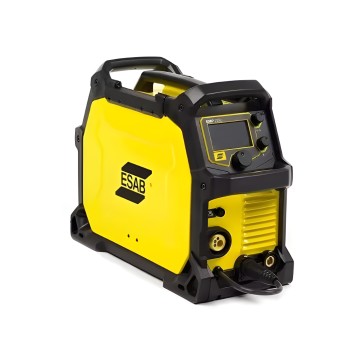
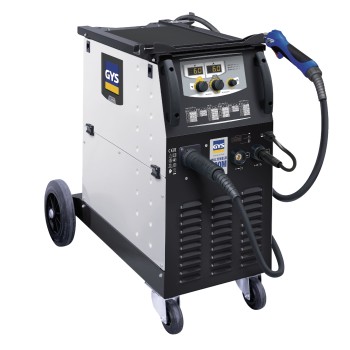
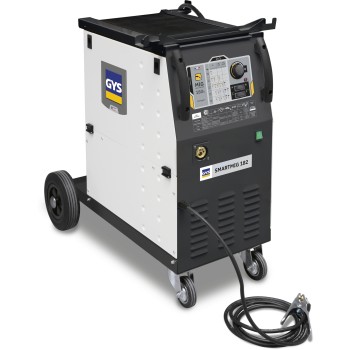
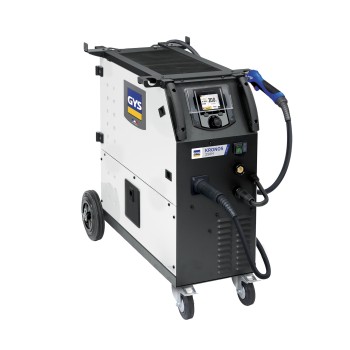
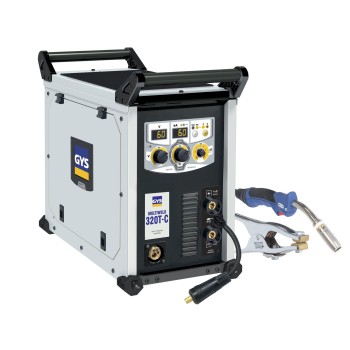
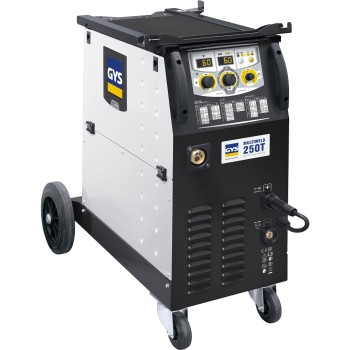
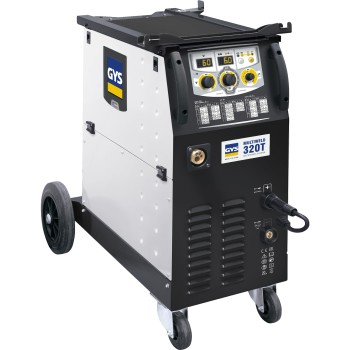
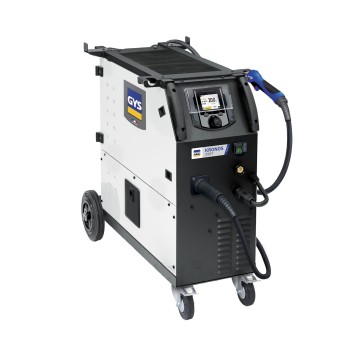
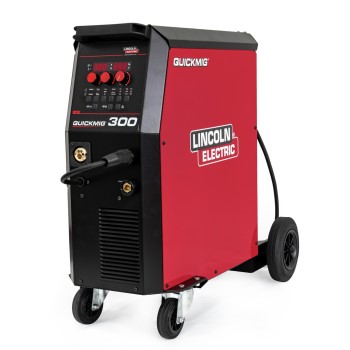
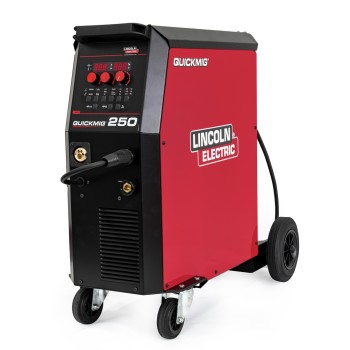
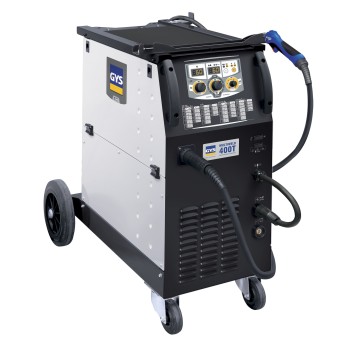
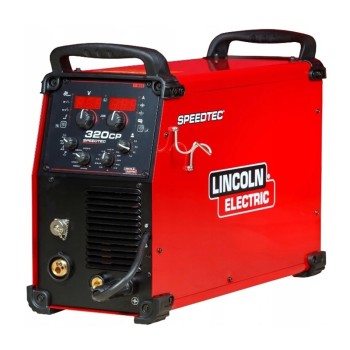
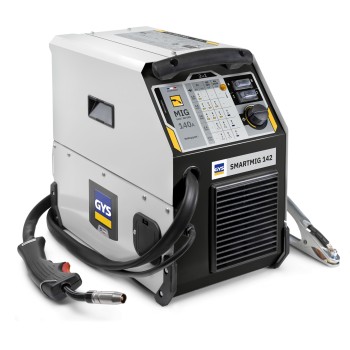
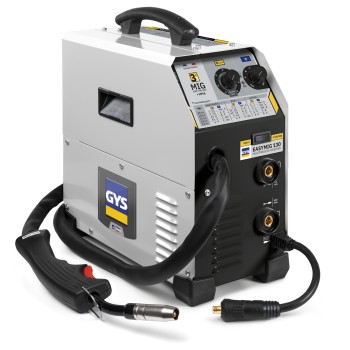
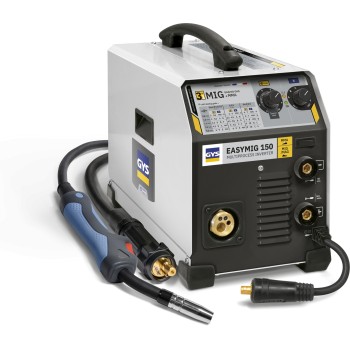
The gas MIG welding machine is the reference choice for clean and consistent weld beads in the workshop. Thanks to solid wire and a shielding gas, the gas MIG machine offers a neat finish, ideal for thin sheet metal and visible parts. Discover our selection of semi-automatic gas machines, from the compact model to the professional generator.
The principle of gas MIG welding
The gas welding machine continuously feeds a solid wire that melts to form the weld bead, while a shielding gas isolates the weld pool from the air. This gas shielding ensures a sound bead, free of porosity, with very little slag. The semi-automatic gas welding machine is thus the preferred solution whenever bead appearance quality and cleanliness matter.
Why choose gas MIG?
Compared to gasless flux-cored wire, the gas MIG machine produces fewer spatter, a cleaner bead and virtually no slag to chip off. It is the ideal option for bodywork, thin sheet metal and all precision workshop tasks. However, gas disperses in the wind: for outdoor use, a flux-cored wire welding machine is preferred. Many 2-in-1 models combine both modes.
Which gas depending on the metal?
The gas MIG welding machine adapts to the metal through the choice of gas. For steel, an argon-CO₂ mixture is used, ensuring penetration and arc stability. For aluminium, it is pure argon. Stainless steel is welded with specific mixtures. The gas is therefore chosen according to the metal being worked: find our MIG/MAG gas cylinders suited to your needs.
Solid wire, the consumable for gas MIG
The semi-automatic gas welding machine works with a solid wire spool, to be chosen according to the metal (steel, stainless steel, aluminium) and the diameter suited to the thickness. Solid wire produces a cleaner bead than flux-cored wire, but requires gas shielding. A quality wire feeder, suitable drive rolls and a contact tip of the right size ensure smooth feeding.
Choosing the right machine
The maximum amperage determines the weldable thickness, the duty cycle ensures endurance, and the wire feeder determines the regularity of feeding. Prefer a synergic machine, which automatically adjusts voltage and wire speed based on the selected metal and diameter: it is immediately easy to use. To compare the full range, browse our MIG-MAG machines section.
Essential accessories
A complete gas MIG machine comes with a quality MIG torch, contact tips of the right diameter and suitable drive rolls. To secure and transport the gas cylinder, a machine trolley fitted with straps is highly recommended. For safety, an auto-darkening welding helmet and welding gloves are essential.
Gas adjustment and flow rate
The quality of the weld bead depends on the correct adjustment of the gas flow rate, generally between 8 and 12 l/min in a workshop, adjusted with a flow regulator. A flow rate that is too low lets air in and creates porosity; a flow rate that is too high causes turbulence. Also adjust voltage and wire speed by testing on a scrap piece of metal.
Synergic adjustment, simplicity itself
The main advantage of a modern gas MIG welding machine is synergic mode. Rather than adjusting voltage and wire speed separately, you input the metal, wire diameter and gas: the electronics automatically calculate the optimal parameters. The result is a consistent bead from the very first attempts, without any prior experience of manual adjustment. For fine-tuning, most synergic machines offer a fine adjustment around the calculated point. This assistance saves valuable time in production and ensures the quality of the gas MIG machine, particularly for occasional welders or those still learning. Nevertheless, always validate your settings with a test bead on a scrap piece.
Our recommendation
For clean welds in the workshop, the gas MIG welding machine is the ideal choice. Opt for a synergic model from 160 to 200 A, choose the gas suited to your metal (argon-CO₂ for steel, argon for aluminium) and the right solid wire. If you also work outdoors, a 2-in-1 model with and without gas offers maximum versatility. Browse our selection of gas MIG machines.
Frequently asked questions
What is the difference between a gas MIG machine and a gasless MIG machine?
Gas MIG uses a solid wire and an external shielding gas: clean bead, few spatter, ideal in a workshop. Gasless MIG uses flux-cored wire that generates its own protection: practical outdoors, wind-resistant, but with slag to remove.
Which gas to use with a MIG welding machine?
Depending on the metal: an argon-CO₂ mixture for steel, pure argon for aluminium, and specific argon-based mixtures for stainless steel. The gas is always chosen according to the metal being welded.
Which wire to use with a gas MIG machine?
A solid wire, chosen according to the metal (steel, stainless steel, aluminium) and the diameter suited to the thickness. Solid wire produces a cleaner bead than flux-cored wire, but requires gas shielding to protect the weld pool.
What gas flow rate should be set for MIG welding?
In the workshop, generally between 8 and 12 l/min, adjusted with a flow regulator. A flow rate that is too low lets air in and creates porosity; a flow rate that is too high causes turbulence that draws in ambient air. The setting is validated by a test bead.


 Italy
Italy
 Germany
 Netherlands
 Croatia
 Denmark
 Finland
 Greece
 Ireland
 Sweden
 Norway
 Bulgaria
 Estonia
 Latvia
 Lithuania
 Poland
 Czech Republic
 Romania
 Slovakia
 Slovenia
 Hungary
 Spain
Spain



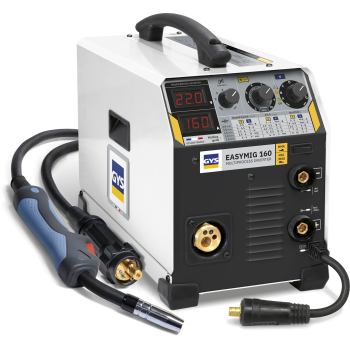
 2-year warranty